 By
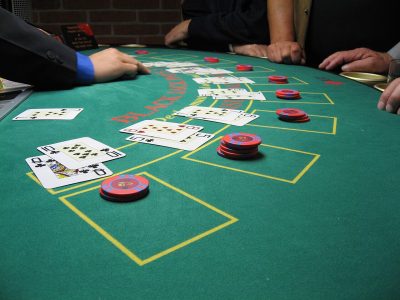
Few moments at a casino table generate as much collective tension as a dealer turning an Ace face up. Before players can hit, stand, or double down, the dealer pauses, sweeps their arm across the green felt, and poses a familiar question: “Insurance, anyone?”
To casual observers and novice players, taking insurance feels like prudent risk management. The casino frames it as a defensive shield, a protective buffer designed to soften the blow if the dealer flips a ten-value card and reveals a natural blackjack. After all, nobody enjoys watching a solid starting hand get wiped out before the round even begins.
In reality, blackjack insurance is not protection at all. It is one of the most profitable side bets in the casino’s arsenal, packaged under a deceptive name that preys on human loss aversion. When stripped of its comforting terminology and analyzed through pure probability, purchasing insurance is an objectively negative-expectation gamble that systematically drains a player’s bankroll.
The Semantic Illusion: Why It Isn’t Real Insurance
In everyday life, insurance serves a clear financial purpose. You buy homeowner’s insurance to transfer catastrophic risk to a third party so a fire does not bankrupt you. The premium is a known, acceptable cost paid to protect an underlying asset from complete destruction.
The casino borrows this familiar concept to create an emotional trap. Calling the side bet insurance implies that it is intrinsically tied to the fate of your original hand. It suggests you are guarding your starting wager against an unfortunate outcome.
Mechanically, however, the bet has zero bearing on your original cards.
When you take insurance, you are placing an entirely separate, secondary wager on a simple proposition: is the dealer’s facedown card worth ten points? If the hole card is a ten, Jack, Queen, or King, your insurance bet pays out at 2-to-1, while your initial hand loses to the dealer’s blackjack. If the hole card is anything else, the dealer scoops up your insurance chips, and you proceed to play your original hand at full financial risk.
You are not protecting an asset; you are making an isolated, blind side bet on card distribution with house-skewed payouts.
Deconstructing the Odds: The Flaw in the 2-to-1 Payout
Every wager in a casino comes down to the relationship between the true odds of an event occurring and the payout offered by the house. For a bet to break even in the long run at a 2-to-1 payout, the winning outcome must happen at least once every three attempts, or precisely 33.33% of the time.
If the dealer’s unseen card turns out to be a ten-value card more than one-third of the time, the bet favors the player. If it occurs less than one-third of the time, the bet favors the house.
The math of a standard deck reveals why this threshold is practically impossible to reach under normal conditions:
-
A standard 52-card deck contains 16 ten-value cards (four tens, four Jacks, four Queens, and four Kings) and 36 non-ten cards.
-
Ten-value cards represent 16 out of 52 cards, or roughly 30.77% of the deck.
-
Non-ten cards represent roughly 69.23% of the deck.
To see how this plays out in practice, consider a standard six-deck shoe containing 312 cards, which is the most common setup in American casinos today. In a fresh six-deck shoe, there are 96 ten-value cards and 216 non-ten cards.
When the dealer shows an Ace, exactly one card is known to the table. That leaves 311 unseen cards in the shoe, consisting of 96 tens and 215 non-tens.
The probability that the dealer’s hole card is a ten is 96 divided by 311, which equals 30.87%.
Because 30.87% is substantially lower than the 33.33% required to break even on a 2-to-1 wager, the casino holds an overwhelming mathematical edge. On average, the house edge on an insurance bet in a standard six-deck shoe sits at roughly 7.40%.
To put that figure into perspective, playing standard blackjack using basic strategy carries a house edge of roughly 0.50%. By taking insurance, you are volunteering to play a side game with a house advantage that is nearly fifteen times worse than the base game itself.
The Good Hand Fallacy: Why Insuring a 20 Is Self-Sabotage
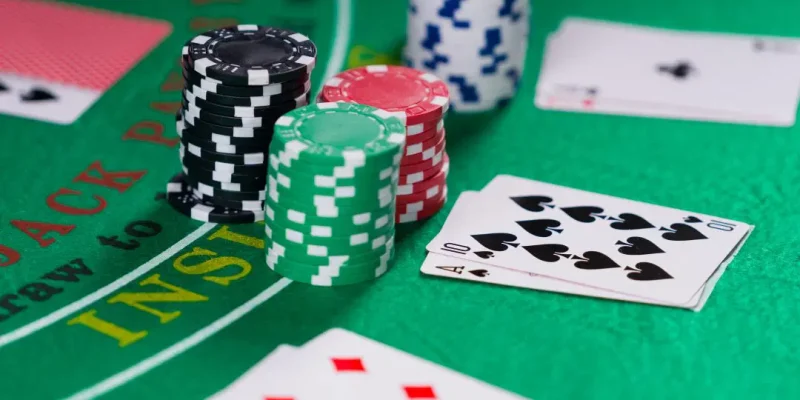
The psychological temptation to buy insurance reaches its peak when a player is dealt a powerhouse starting hand, such as a pair of tens or an Ace-nine for a hard 20. The internal monologue is predictable: you have invested good money, you are holding an almost certain winner, and you want to lock in a profit or ensure you break even rather than lose to a dealer blackjack.
In truth, holding a 20 makes purchasing insurance an even worse mathematical blunder.
Blackjack is a game of dependent trials; every card dealt onto the table removes a card from the remaining shoe, slightly shifting the probabilities of subsequent draws. When you look down at your hand and see two ten-value cards, you are holding crucial information that works directly against your insurance wager.
If you are holding two tens, those cards are no longer available in the deck to serve as the dealer’s hole card.
The Depleted Ten Shoe
Returning to our six-deck example with 311 unknown cards, factoring in your own two tens completely changes the ratio. Now, there are only 309 cards remaining that you have not seen. More importantly, the pool of available tens has dropped from 96 down to 94.
The probability of the dealer having a blackjack plummets to 94 divided by 309, which is approximately 30.42%. Consequently, the house edge on your insurance bet spikes to 8.74%.
In a single-deck game, this removal effect becomes catastrophic. If you hold two tens against a dealer Ace in a single-deck round:
-
There are 49 unseen cards remaining.
-
Only 14 ten-value cards remain in the deck.
-
The probability of the dealer having blackjack drops to 14 divided by 49, or 28.57%.
-
The house edge on your insurance bet skyrockets to 14.29%.
The very scenario where players feel the most desperate to buy insurance is precisely when the deck has been bled of the cards required to make the bet pay off. It is an exercise in paying a massive premium for a claim that is less likely to materialize than usual.
The Even Money Trap
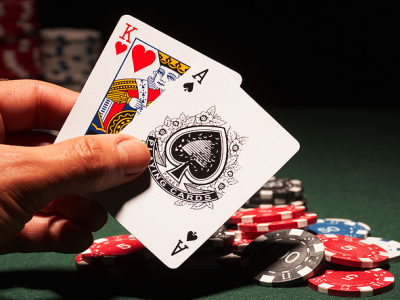
When a player hits a natural blackjack and the dealer shows an Ace, the dealer often offers a variation known as even money. Instead of waiting to see if the dealer also has a blackjack, the player can take an immediate 1-to-1 payout on their original bet, walking away with guaranteed profit.
Casinos present even money as a gesture of goodwill, a generous compromise that eliminates variance. In reality, even money is mathematically identical to buying insurance.
Suppose you wager $100 and receive a natural blackjack, while the dealer shows an Ace. You have two options:
-
Option A: Accept Even Money. You take a guaranteed $100 profit right now, forfeiting the standard 3-to-2 payout.
-
Option B: Decline Even Money. You let the hand play out. If the dealer has a ten, you push and win nothing. If the dealer does not have a ten, you collect the full 3-to-2 payout of $150.
Let us run the expected value on declining even money in a six-deck shoe. As established, the dealer has a 30.87% chance of holding a ten and a 69.13% chance of holding a non-ten:
-
30.87% of the time, you win $0.
-
69.13% of the time, you win $150.
Multiplying 0.6913 by $150 yields an expected return of $103.70.
By accepting even money, you take a guaranteed $100 payout instead of an option with an expected mathematical value of $103.70. You are willingly sacrificing $3.70 of equity on every hundred-dollar bet just to eliminate temporary discomfort. While securing an immediate win satisfies human psychology, systematically accepting even money chips away at your long-term return.
The Singular Exception: Card Counting
There is only one circumstance under which purchasing insurance becomes mathematically justified: when an advantage player is counting cards.
Card counters track the ratio of high cards (tens and Aces) to low cards (twos through sixes) remaining in the shoe. When an unusually high density of small cards has already been played, the remaining unplayed shoe becomes heavily saturated with ten-value cards.
In standard counting systems like the Hi-Lo, players calculate a True Count, which normalizes the running count on a per-deck basis. When the True Count reaches +3 or higher, the concentration of ten-value cards in the shoe crosses the critical 33.33% inflection point.
At that exact threshold, the odds flip. Because tens now represent more than one out of every three cards left in the shoe, the 2-to-1 payout offered by the casino carries a positive expected value. For an advantage player, taking insurance at this point has nothing to do with protecting a hand; it is simply capitalizing on a mispriced wager where the player holds the statistical edge.
For anyone who is not maintaining an accurate count of a multi-deck shoe, this scenario never applies. Without that specific mathematical certainty, every insurance bet placed is an unforced error.
The Disciplined Path Forward
Blackjack has endured as the premier table game in American casinos because it rewards knowledge, discipline, and emotional detachment. Unlike roulette or slot machines, player decisions directly dictate the mathematical house advantage.
Buying insurance contradicts the very foundation of sound blackjack strategy. It relies on the illusion of security to sell a wager featuring a house edge far worse than the game you sat down to play. It penalizes you the most when your hand is strongest, and it siphons value away from your natural blackjacks under the guise of an easy compromise.
To maximize your longevity and profit potential at the blackjack table, treat insurance as an irrelevant distraction. When the dealer shows an Ace and makes the customary sweep across the layout, wave it off without hesitation. Long-term success in blackjack does not come from running for cover; it comes from trusting the math and refusing to pay the house an unnecessary tax.
What is your reaction?
Excited
0
Happy
0
In Love
0
Not Sure
0
Silly
0