 By
Hollywood has spent decades cultivating a dramatic mythology around card counting. In pop culture, the scene is always identical: a mathematically gifted savant cleans out the tables, triggers a red alert in a dimly lit surveillance bunker, and gets dragged into a concrete back room by imposing security guards in dark suits. The cinematic version involves whispered threats, physical intimidation, and a dramatic exile into the desert night.
The reality of modern advantage play is far more bureaucratic, quiet, and mundane. There are no interrogation rooms, no shattered kneecaps, and rarely any raised voices. Instead, a well-dressed shift manager casually steps up to the felt, taps you gently on the shoulder, and delivers a polite, rehearsed sentence: “Your action is too good for us tonight, sir. You’re welcome to play any other game, but your blackjack play is done.”
Known across the industry as the backoff, this interaction is an inevitable milestone for anyone who attempts to beat the casino at its own flagship table game. Yet, the legal, psychological, and operational realities of getting barred from blackjack are frequently misunderstood by casual players and aspiring card counters alike. Understanding how casinos identify advantage players, the legal boundaries governing their response, and what actually happens when you are shown the door reveals a complex dance between corporate property rights and mathematical probability.
The Legal Truth: Brain Power vs. Private Property
A persistent misconception among the general public is that counting cards is illegal. Under federal law, state statutes, and gaming commission regulations across the United States, keeping track of cards in your head is entirely lawful. Using an external physical or digital aid—such as a smartphone app, an optical scanner hidden in a sleeve, or a computerized shoe tracker—is a felony. However, utilizing your own brain to analyze publicly available information dealt face-up on the table is simply playing the game well.
The catch lies not in criminal statutes, but in common-law property rights. In the United States, commercial casinos are privately owned establishments open to the public. Under traditional private enterprise doctrine, a business owner retains the right to refuse service to any individual, provided that refusal does not violate protected civil rights categories such as race, religion, gender, or national origin.
Because “advantage players” and “card counters” do not constitute a legally protected class, casinos in jurisdictions like Nevada, Pennsylvania, and tribal lands can revoke your privilege to play at will. They do not need to prove you are counting. They do not need to justify their decision to a judge or a gaming agent. They simply decline to accept your business.
The primary American exception to this rule is New Jersey. Following a landmark state Supreme Court ruling in the late 1970s, Atlantic City casinos are prohibited from banning players simply for using mental skill to gain an edge. Deprived of the ability to back players off, Atlantic City casinos adapted by deploying aggressive counter-measures: shallow shoe penetration, continuous shuffling machines, table minimum increases, and the right to flat-bet players, forcing them to wager the exact same dollar amount every hand and eliminating the spread necessary to profit.
How Surveillance Catches Counters in the Digital Era
Many beginner counters assume they are being watched because of their eyes, their posture, or the speed at which they total their cards. In reality, surveillance operators and floor supervisors care very little about your body language. They catch card counters by watching the mathematical relationship between the shoe and the money.
Bet Spread Correlation
Blackjack is unique among table games because the house edge fluctuates with every card dealt. When small cards (twos through sixes) leave the shoe, the remaining cards are disproportionately ten-value cards and Aces, which favors the player. A card counter’s edge comes entirely from betting minimal amounts when the deck favors the house and exponentially raising their wagers when the deck turns positive.
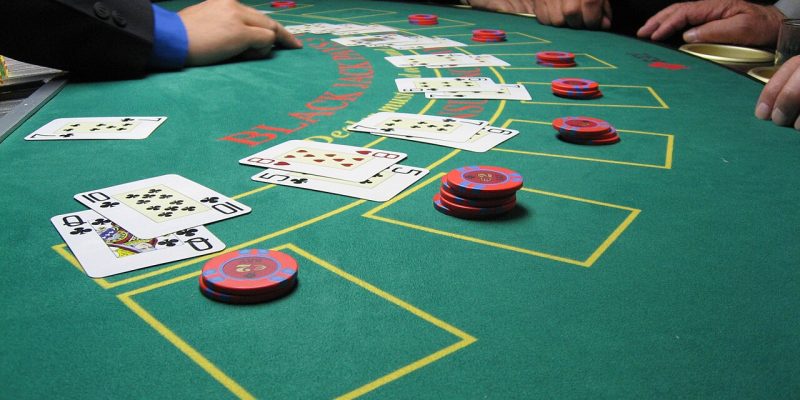
This shifting wager size is known as a bet spread. If a patron sits at a twenty-five-dollar minimum table and consistently bets twenty-five dollars for twenty hands, only to suddenly drop three hundred dollars on two spots the moment small cards drain out of the shoe, that player has created a statistical footprint. Surveillance software and experienced floor staff track this correlation. If your bet increases systematically align with the true count over dozens of hands, the casino confirms you are an advantage player without ever examining your facial expression.
Strategy Deviations and the Illustrious 18
Casinos also monitor play deviations. Basic strategy dictates the mathematically optimal play for an average hand, but card counters regularly deviate from basic strategy based on the count.
When the shoe becomes heavily saturated with high cards, counters make plays that seem irrational to novice observers: taking insurance, splitting tens against a dealer five or six, or standing on sixteen against a dealer ten. Casino surveillance personnel use specialized evaluation software that grades a player’s hand decisions. If an evaluation shows a player executing complex, index-based strategy deviations right as the count spikes, the evaluation is closed, and the pit receives the call.
Network Databases and Biometrics
Decades ago, casino networks relied on printed reference compilations like the historic Griffin Book to circulate mugshots and physical descriptions of advantage players. Today, property security utilizes high-definition pan-tilt-zoom cameras, facial recognition algorithms, and networked private databases like OSN (Observer Services Network) and Biometrica.
When an advantage player is identified at a property in downtown Las Vegas, high-resolution stills of their face and profile are shared with affiliated properties across the Strip and regional gaming hubs across the country. An unrated counter can walk into a casino where they have never stepped foot before, sit down at a shoe, and find themselves backed off within fifteen minutes simply because an overhead camera matched their facial profile to an existing industry dossier.
The Anatomy of the Backoff
When a casino decides to pull the plug on your play, the interaction follows an established progression. Most operators prefer to avoid public scenes, meaning the confrontation is handled with quiet professionalism.
The Gentle Game Restriction
The mildest form of backoff leaves the player free to remain in the casino. A pit boss or table games shift manager will approach during a shuffle or between rounds. They will state that the player can no longer wager on blackjack, or that they will be restricted to a single minimum bet per hand without the option to spread. In these instances, the casino does not view the player as a threat to property safety, only to the blackjack department’s daily hold. The patron is free to cash their chips, eat dinner, or play poker.
The Full Property Barring and Trespass
If a player has established a lengthy history of aggressive play, plays under alias identities, or attempts to return to tables after a previous verbal warning, the interaction escalates to a formal trespass.
In this scenario, security officers join the table games manager. The player is informed that their presence on the entire property is no longer permitted. In many jurisdictions, security will read an official trespass warning, stating that setting foot on any parcel of the resort’s private property—including the casino, hotel, parking garage, and affiliated retail shops—will result in immediate arrest for criminal trespassing under local ordinances.
Security then escorts the player to the cashier cage to redeem their chips, walks them to the property perimeter, and warns them never to return.
The Cashier Cage and Chip Cashing Disputes
A common anxiety among players is whether a casino can legally confiscate their winnings upon being backed off.
Under established gaming commission rules across all legal American jurisdictions, a casino cannot confiscate chips earned through honest, unassisted table play. Your chips represent a debt owed to you by the casino. The casino has the legal right to stop taking your wagers going forward, but they cannot void past wagers that were completed according to house rules.
However, friction frequently arises at the cashier cage regarding identification. Under federal Anti-Money Laundering (AML) regulations, casinos must generate Currency Transaction Reports (CTRs) for transactions exceeding ten thousand dollars in a single gaming day, requiring a government-issued ID.
Casinos occasionally attempt to mandate ID for redemptions well below this statutory threshold, sometimes using cage procedures to identify unrated card counters who refused to surrender their names at the table. While players often debate their obligation to show identification for smaller chip amounts, maintaining composure and calmly insisting on chip redemption without instigating a confrontation is critical to walking out with bankroll intact.
The Reality of Casino Longevity
For anyone pursuing advantage play seriously, getting backed off is not an extraordinary tragedy; it is the fundamental operating cost of doing business. You cannot consistently play with a mathematical advantage without eventually being noticed by an industry whose entire business model relies on the house holding the edge.
Because bans and restrictions are inevitable, successful card counters prioritize longevity over short-term ego. They keep their playing sessions brief, rarely staying at a single table for more than forty-five minutes. They avoid playing with loyalty rewards cards that tie their true identities to advantage play patterns. They blend into the floor by tipping dealers, bantering naturally, and strategically avoiding obvious play adjustments when the pit boss is standing directly behind their chair.
Card counting is not a glamorous movie sequence full of clandestine high-stakes intrigue. It is an unglamorous, highly disciplined mathematical enterprise played out on private property. The cards may be dealt in public view, but the moment you prove you can beat the math, the casino will quietly exercise its rights as a private host, remind you that the house always writes the rules, and gently show you to the door.
What is your reaction?
Excited
0
Happy
0
In Love
0
Not Sure
0
Silly
0